A1 Garage Door Logo 1

Torsion vs Extension Garage Door Springs Pittsburgh: Which Type Is Right for Your Home?

    Pittsburgh has a tightly connected home-services ecosystem — from the HVAC crews in Mt. Lebanon to the insulation contractors in Squirrel Hill, most trades know each other, refer each other, and keep a short mental list of who handles what. Garage door specialists sit right in that web. When a general contractor frames a new garage in Cranberry Township, they call us about the springs. When a home inspector flags a worn spring in McMurray, the buyer’s realtor passes along our number. And when the question comes down to torsion vs extension garage door springs Pittsburgh homeowners are renovating around — that’s exactly the kind of trade-off our team fields every week.


    Below, we break down both spring types honestly so you can walk into any conversation with an overhead door company knowing what you’re actually choosing between.

    How Pittsburgh's Local Garage Door Network Actually Works

    Most people don’t realize how much referral traffic flows between trades in the Pittsburgh area. Realtors, home inspectors, general contractors, and garage door fixers near me all cross paths constantly — especially in older neighborhoods like Brookline, Lawrenceville, and Dormont where the housing stock dates back 60 to 100 years.


    Here’s how the network typically breaks down:


    • Home inspectors flag broken or visibly fatigued springs during a pre-sale inspection. They don’t repair — they document and refer.
    • General contractors doing kitchen or basement remodels often notice a dated garage door system and loop in a specialist before closing out the job.
    • Overhead door companies (including our crew) get the actual repair and replacement calls, assess which spring system is installed, and advise on upgrades.


    When a spring issue comes up, the referring trade almost always passes along one specific question from the homeowner: “Should I replace it with the same type, or switch to something better?” That’s the torsion-vs-extension debate — and it deserves a real answer.

    What Torsion Springs Do — and Why Most Overhead Door Companies Prefer Them

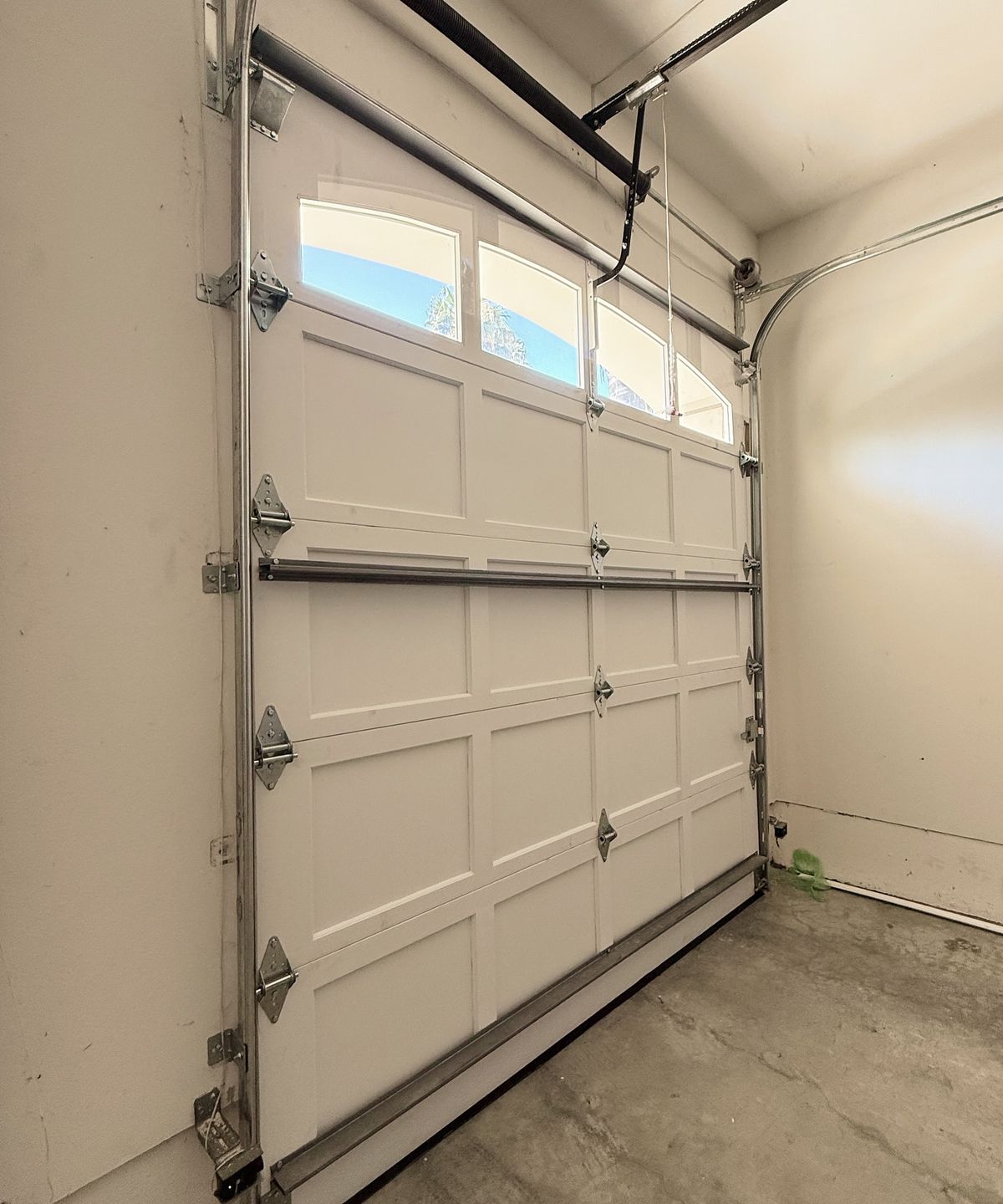
    Torsion springs sit horizontally above the garage door opening, mounted on a metal shaft. When you close the door, the spring winds up and stores tension. When you open it, that tension unwinds and does the heavy lifting.


    Why we recommend torsion springs in the vast majority of Pittsburgh installations:


    • Longer lifespan. A standard torsion spring is rated for 15,000–20,000 cycles. One cycle = one open + one close. If your household uses the door four times a day, that’s roughly 10–14 years of life.
    • Smoother operation. The force is applied evenly across the door width, which reduces wear on rollers, tracks, and the opener motor.
    • Safer failure mode. When a torsion spring breaks, it stays on the shaft. It doesn’t fly across the garage.
    • Better for heavier doors. Pittsburgh’s older homes often have solid wood or insulated steel doors that weigh 150–300 lbs. Torsion systems handle that weight more reliably.
     

    The main trade-off is upfront cost. A torsion spring replacement typically runs $150–$250 per spring installed, depending on door size and spring specifications.

    Extension Springs: The Lower-Cost Option with Real Trade-Offs

    Extension springs run along the horizontal tracks on either side of the door — one on each side. They stretch (extend) when the door closes and contract when it opens, using stored elastic energy to counterbalance the door’s weight.


    You’ll still find extension springs in millions of garages across the country, and they’re not inherently bad. But they do come with specific limitations that matter for Pittsburgh homeowners.

    Is Your Garage Door Giving You Trouble?

    Dealing with a broken garage door? Our experienced technicians provide quick, dependable repairs for broken springs, damaged openers, off-track doors, and more. We deliver quality workmanship and prompt service to get your garage door working safely again.

    When Extension Springs Make Sense

    • Low-clearance garages. If your garage ceiling doesn’t have enough headroom for a torsion shaft and drum assembly, extension springs may be your only structural option without significant modification.
    • Budget-driven replacements. Extension springs cost less up front — typically $100–$175 per pair installed — making them attractive for rental properties or short-term budget situations.
    • Lighter doors. A single-car door weighing under 100 lbs puts less stress on extension hardware.

    The Real Trade-Offs

    • Shorter cycle rating. Most residential extension springs are rated for 10,000 cycles — roughly 30% less life than a torsion spring.
    • Safety cables are non-negotiable. A snapped extension spring becomes a projectile. Safety cables thread through the spring and contain it if it breaks. If you have extension springs without safety cables, that needs to be corrected immediately.
    • They wear unevenly. Because each side works independently, one spring often ages faster than the other — which creates an unbalanced door that stresses the opener.


    We’ve handled plenty of extension spring repairs in Bethel Park and across the South Hills. They’re manageable, but we always have an honest conversation about whether upgrading to torsion makes sense given the door type and how long the homeowner plans to stay in the house.

    Side-by-Side Comparison: Torsion vs Extension Springs for Pittsburgh Homes

    Feature
    Torsion Springs
    Extension Springs
    Average lifespan
    15,000–20,000 cycles
    10,000 cycles
    Typical install cost
    $150–$250/spring
    $100–$175/pair
    Safety on failure
    Stays on shaft
    Can snap free (needs cable)
    Best for heavy doors
    Yes
    Limited
    Works in low headroom
    Requires standard clearance
    Yes
    Balanced lift
    Yes
    Can be uneven
    DIY-friendly
    No — high tension, dangerous
    No — still high risk
    One thing worth noting: neither spring type should be a DIY project. The tension stored in a garage door spring — either type — is enough to cause serious injury. Every overhead door company worth calling will tell you the same thing.

    When a Spring Breaks in Pittsburgh: Who to Call and What to Expect

    A broken spring is one of the most common calls we get for garage door Repair Pittsburgh PA. The door won’t open, the opener strains or grinds, or you hear a loud bang from the garage (that’s the spring snapping under tension).


    Here’s what a typical service call looks like with our team:


    1. Diagnosis — We confirm which spring type you have, assess the door’s balance, and check rollers, cables, and drums while we’re there. A spring failure often comes with secondary wear.
    2. Spring selection — We discuss torsion vs extension based on your door weight, headroom, and budget. We don’t upsell torsion if extension genuinely fits your situation.
    3. Replacement — Most spring replacements take 45–90 minutes on-site. We always recommend replacing both springs at the same time if they’re the same age — the second one usually isn’t far behind.
    4. Balance test — We manually test the door balance before leaving. A properly balanced door should hold itself open at about halfway — it shouldn’t drift up or fall.


    If you’re in the South Hills area, our garage door springs repair in Bethel Park page covers that service zone specifically. For the eastern suburbs, we also handle garage door springs repair in Monroeville and the surrounding communities.
    Frequently Ask Questions

    Frequently Asked Questions About Garage Door Springs in Pittsburgh

    Look above the door when it’s closed. If you see a single horizontal spring (or two springs) mounted on a bar running across the top of the opening, that’s a torsion system. If you see springs running along the horizontal tracks on either side of the door, those are extension springs.

    Technically you can replace just the broken one, but we almost never recommend it. Springs are sold in matched pairs and age together. If one has failed, the other is likely within months of the same point. Replacing both now saves you a second service call soon after.

    For a standard residential door, plan on 45–90 minutes. If we find secondary damage — worn cables, bent drums, or a stressed opener — it can run longer. We’ll always tell you what we find before we proceed.

    No. A door without functioning springs puts the entire weight load on the opener motor, which isn’t designed to carry it. You risk burning out the opener, straining cables, or having the door drop unexpectedly. Stop using it until the spring is replaced.

    For torsion springs, expect $150–$250 per spring including labor. Extension springs run $100–$175 for the pair. Prices vary based on door size, spring specifications, and whether additional hardware (cables, drums) needs attention. We give straightforward quotes before starting any work.

    How Spring Choice Connects to Your Overall Garage Door Health

    Choosing the right spring isn’t just about the spring itself — it affects every connected component. A door that’s out of balance wears rollers faster, shortens opener motor life, and can pull cables off the drum over time. These are the compounding costs that don’t show up in the initial spring price comparison.


    Our team at A1 approaches every spring call as a system check, not just a part swap. We look at the full picture: spring type, cable condition, roller wear, opener load, and headroom. That’s what separates a quality repair from one that sends you back to searching for garage door fixers near me six months later.


    If your door is struggling to open, making grinding or snapping sounds, or you suspect your springs are near the end of their rated cycle life — don’t wait for a full failure. Give A1 Garage Door Repair a call today. We serve Pittsburgh and the surrounding communities, offer same-day appointments when available, and give honest assessments with no-pressure quotes. Reach out through our contact page or call us directly to schedule your service.