Homeowner guide · Opener repair
Signs your garage door opener needs repair: When to call a pro in Pittsburgh
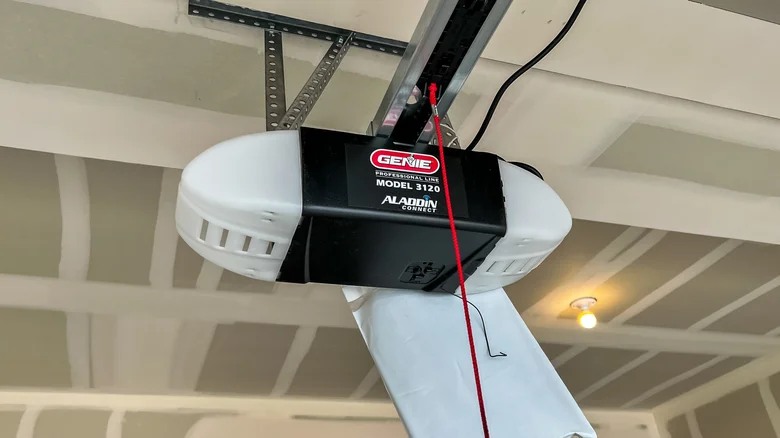
Your opener hummed, groaned and then stopped, and now it won’t lift the door or reverse. If your opener is acting up, this guide walks through the warning signs, how to tell an opener fault from a door problem, and when to call a pro. Whether you need garage door opener repair in Pittsburgh today or just want to know what’s wrong, start here.
What opener problems look like in Pittsburgh garages
In Pittsburgh, older homes in neighborhoods like Squirrel Hill and Lawrenceville come with garages that haven’t had their openers touched in 15 or 20 years. Out toward the suburbs — Gibsonia, Sewickley, Butler — many homes from the early 2000s have chain-drive openers reaching the end of their service life.
Common problems include an opener flashing a light code nobody has looked up, safety sensors knocked out of line, a failed logic board, and openers that turn out to be fine because the real problem is a broken spring (more on that below).
The urgent failures, a door stuck open or shut the night before a trip, usually follow warning signs that were there for weeks; they are just easy to miss.
The warning signs your garage door opener needs repair right now
This is the list we wish every Pittsburgh homeowner had on their refrigerator. The signs your garage door opener needs repair aren’t usually subtle — they’re just easy to rationalize away.
It hesitates before moving
Your door should respond within one to two seconds of pressing the remote or wall button. If there’s a noticeable pause — three, four, five seconds — before anything happens, the logic board or motor capacitor is likely struggling. It is most likely in older belt-drive and chain-drive units during cold Pittsburgh winters, when internal components stiffen up.
The motor runs but the door doesn’t move
This one trips people up. You hear the opener running, but the door sits still. It can be the opener, with a stripped drive gear or a trolley that was disconnected, or the door, with a broken spring. Look at the springs first: a single broken torsion spring means the opener is suddenly trying to lift the door’s whole weight, which it isn’t built to do. The opener sounds like it’s trying, but it’s fighting a losing battle.
Grinding, rattling, or screeching sounds
A healthy opener is quiet — a low hum and the sound of the door moving. Grinding usually points to worn drive gears inside the opener head. Rattling can mean a loose trolley carriage. Screeching often comes from the chain or belt itself needing lubrication or replacement. None of these fix themselves.
The door reverses before hitting the floor
Safety reversing is a feature. But if your door turns around two feet off the ground for no obvious reason, the close-force limit is likely miscalibrated, or the safety sensors are misaligned or dirty. In the fall, leaves and debris can block the sensor eyes or knock them out of alignment; see garage door sensor repair.
The remote works sometimes but not others
Intermittent operation is a classic sign of a failing logic board or a power supply issue inside the unit. It’s also worth checking whether the remote battery is the culprit before assuming the worst — but if a new battery doesn’t fix it, the problem is almost always internal to the opener itself.
The wall button works but the remote doesn’t (or vice versa)
This distinction matters a lot for diagnosis. Wall button works, remote doesn’t? It’s usually the remote or the antenna. Remote works, wall button doesn’t? That’s usually the wire connection or the button itself. If neither works, you’re looking at the logic board or a power issue at the unit.

Is it the opener or something else? How to narrow it down
Before you call, there’s a quick, safe check worth doing. With the door closed, look at the springs above it without touching them. A torsion spring with a gap in its coils, or an extension spring that is stretched out or hanging loose, means a spring has broken. Then don’t pull the red emergency release or try to lift the door by hand: without the spring, the door is far heavier than it looks and can drop.
If the springs look whole, watch what the opener does. A motor that hums while the door barely moves, a door that rises a few inches and stops, or a cable hanging loose points to the door itself, usually a broken spring or a garage door cable repair, not the opener. Flashing lights, a door that reverses, or controls that work only some of the time point to the opener or its sensors.
This check takes a minute and can save you from replacing an opener that is actually fine. Either way, tell us what you saw when you call; it helps the technician bring the right parts.
Repair vs replace: How to make the call without wasting money
Here’s our honest take:
Repair makes sense when:
- The opener is under 10 years old
- The failure is a single component (logic board, drive gear, capacitor, sensor)
- Parts are still manufactured and available for the model
- The repair cost is less than half the price of a new unit installed
Replacement makes sense when:
- The opener is 15+ years old and parts are discontinued
- It’s had multiple repairs in the past two or three years
- It lacks modern safety features (auto-reverse, rolling code encryption)
- The motor is burned out — that’s rarely worth fixing on an old unit
We’re not in the business of selling you a new opener when a new drive gear fixes the problem. But we’re also not going to patch a 20-year-old unit and bill you again in six months when something else fails. Part of our job is giving you that straight answer.
If you’re weighing your options, take a look at our breakdown of top-rated garage door openers to understand what the current generation of units can do — especially around battery backup, smart home integration, and quieter belt or direct-drive mechanisms.

When to stop waiting and call a pro
Some opener problems are fine to monitor for a day or two. Others aren’t.
Call us the same day if:
- The door is stuck fully open (security risk, especially overnight)
- The door is stuck partially open and won’t respond to anything
- You smell burning from the opener unit
- The opener runs continuously and won’t stop on its own
Schedule within the week if:
- You’re hearing new grinding or rattling sounds
- The door is reversing inconsistently
- Remotes are becoming unreliable
For Pittsburgh homeowners who can’t afford to have a stuck door on a cold night, our garage door same-day service is available for exactly these situations. We cover the full metro — from the North Side neighborhoods to communities well east and south of the city.
Get a straight answer about your opener
Call (412) 991-2971 or book online and describe what you’re hearing or seeing. The service call is $29: a technician diagnoses the problem and quotes the fix, and you approve the price before any work starts. Same-day repair is available seven days a week, and emergency service runs 24/7.
Frequently asked questions
How long should a garage door opener last?
Most quality openers have a practical lifespan of 10 to 15 years with normal use. Units that cycle multiple times a day, or that were installed in uninsulated garages with wide temperature swings (very common in Pittsburgh), tend to land closer to the 10-year mark.
My opener light is flashing. What does that mean?
The flash pattern is a diagnostic code. Most brands use a specific number of flashes to indicate specific faults — sensor misalignment, limit switch issues, motor overload, and so on. Count the flashes and check the label on the back panel of the opener head. If you can’t find the key, call us and describe what you see.
Can I repair a garage door opener myself?
Swapping a remote battery and realigning the safety sensors are reasonable do-it-yourself tasks. Leave the limit and force settings to a technician, since any change has to be checked with a safety-reverse test, and the same goes for the logic board, the drive gear and anything involving the wiring inside the unit. Opener units carry capacitors that hold a charge even when unplugged — that’s a real shock risk if you’re not familiar with the internal components.
Why does my opener work in summer but struggle in winter?
Cold temperatures thicken lubricants, stiffen rubber components, and can cause metal to contract slightly — all of which add resistance to the door’s movement. If your opener is already working near its force limits, winter is when it’ll finally give up. It’s usually a sign the opener is aging or the door needs lubrication and tune-up, not just a seasonal quirk.
Is it worth repairing an opener that’s more than 15 years old?
Honest answer: usually not. Parts availability gets thin beyond 15 years, labor costs approach or exceed the price of a new unit, and older openers lack rolling code security technology that prevents code-grabbing. We’ll tell you the same thing in person — there’s no point in throwing money at a unit that’s past its practical life.
More guides
All guides
Repair or replace your garage door opener? A guide for Pittsburgh homes
Garage door opener problems aren’t new, and breakdowns, malfunctions, and remote failures tend to happen at the worst possible time. These devices are no longer just simple motors. Today’s systems include sensors, boards, wireless remotes, and smart integrations.

Signs you need a new garage door opener in Washington, PA
Your garage door opener works quietly in the background until, one day, it does not — and usually it gives you warning first. Learning to read those signals can save you from the morning your car is…

When your opener hums but doesn’t lift: Gear strip failures in Monroeville
A garage door should move when you press the button. When it does not move, but the opener makes sound, that can be a sign of trouble inside the unit. In Monroeville homes, this often points to a…